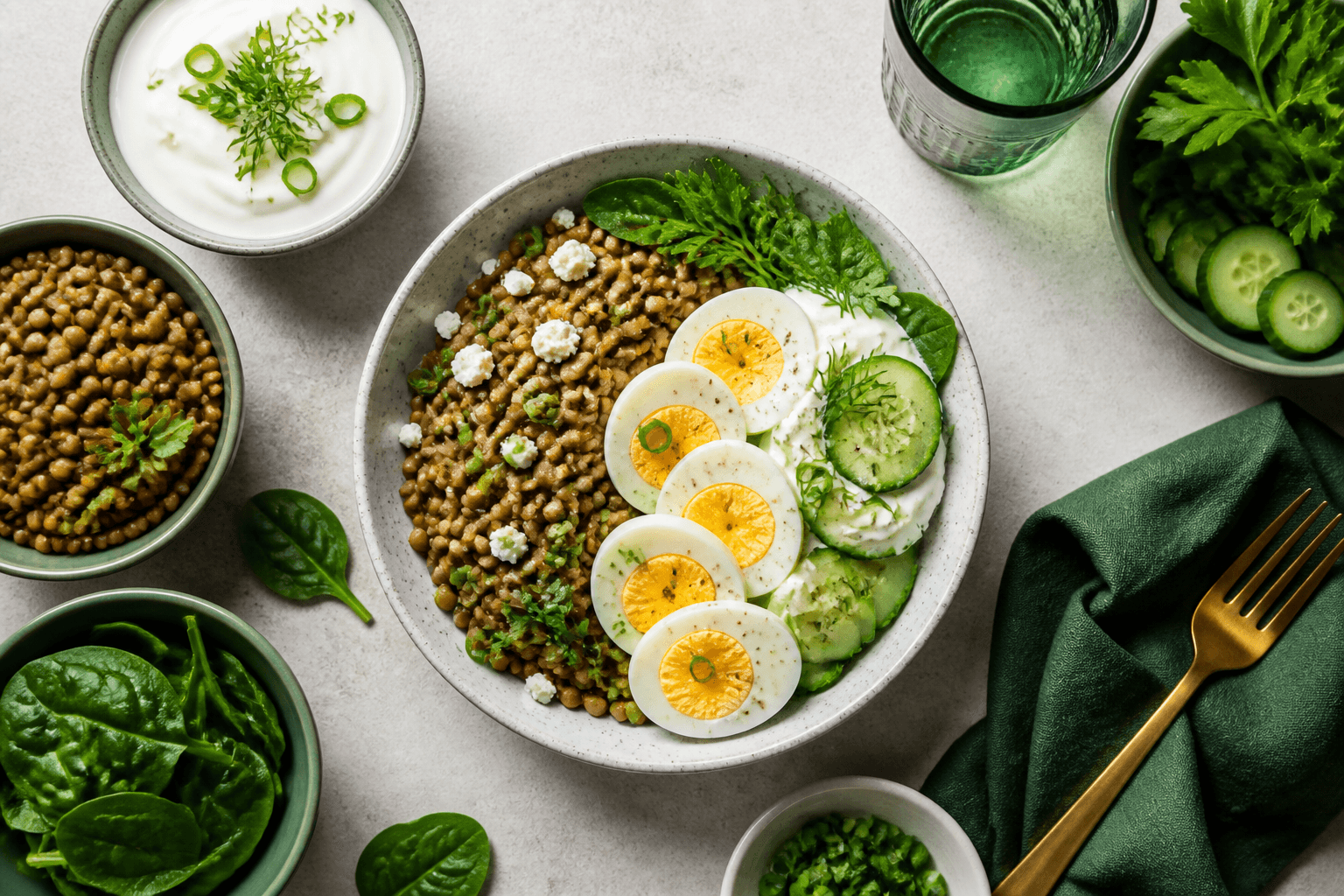
Busy people do not fail protein goals because they lack discipline. They fail because lunch is a meeting, dinner is delivery, and breakfast is coffee. The fix is not a perfect macro spreadsheet. It is making protein the default guest at meals you already eat.
Educational content only—not medical advice, not a prescription for disease treatment. People with kidney disease or clinician-directed diet limits should follow personalized guidance.
What protein is doing in a normal week
Protein helps you feel fuller after meals, supports muscle maintenance when you are active or aging, and makes “I accidentally grazed on snacks all afternoon” less likely. It is not a miracle fat-loss drug. It is a practical meal-building habit.
If you strength train, recover from illness, or are over 40 and noticing easier muscle loss with inactivity, protein attention usually pays off more than another coffee.
A plate rule you can remember without an app
Include a palm-sized protein source in at least two meals daily. For many adults, that is a workable starting pattern. Some people need more; athletes and larger bodies often do. Start with the two-meal rule, then adjust based on hunger, training, and professional advice if needed.
Easy everyday sources:
- Eggs, Greek yogurt, paneer, cottage cheese
- Dal, chickpeas, rajma, lentils with a grain
- Chicken, fish, eggs, lean meats
- Tofu, tempeh, edamame
- Mixed nuts and seeds as add-ons, not the only source
| Meal slot | 5-minute options | Slightly more effort |
|---|---|---|
| Breakfast | Greek yogurt + fruit; egg wrap | Paneer bhurji; tofu scramble |
| Lunch | Dal + rice leftover; tuna wrap | Chicken bowl; chickpea salad |
| Dinner | Eggs on toast + salad; tofu stir-fry kit | Fish with vegetables; rajma |
| Snack bridge | Roasted chana; yogurt cup | Cottage cheese + cucumber |
Build a week without becoming a meal-prep influencer
Sunday 20 minutes: Cook one pot of dal or beans, boil a batch of eggs, portion yogurt cups.
Weekday default: Open the fridge and ask “Where is the protein?” before “What am I craving?”
Delivery nights: Add a side of eggs, a yogurt, or edamame. Or choose the menu item that already includes a clear protein portion instead of only carbs and sauce.
Example week for Leena, who works late: Monday yogurt breakfast, Tuesday leftover chicken lunch, Wednesday egg dinner, Thursday tofu takeout bowl, Friday dal at home. She did not hit perfection. She stopped having three carb-only meals in a row.
Supplements: fillers, not foundations
Protein powder can help when travel, appetite, or time make food hard. It does not replace meals as a lifestyle.
Warning: Supplements help fill gaps. They do not replace meals.
Use powder when:
- You already ate poorly that day and need a bridge.
- You are between meetings and a shake is the difference between something and nothing.
- You have a clinician or dietitian plan that includes them.
Skip the idea that more scoops equal better health.
Failure modes
- Saving all protein for dinner. Spreading intake usually feels better for satiety.
- Calling cereal-with-a-splash-of-milk a high-protein breakfast. Check the label; many bowls are mostly carbohydrate.
- Fear of vegetarian protein. Dal, tofu, dairy (if you use it), and soy are legitimate—pair legumes with grains across the day.
- Tracking into obsession. If logging spikes anxiety or disordered patterns, switch to the plate rule and meal templates.
- Ignoring total diet quality. Protein next to only ultra-processed snacks is still an incomplete pattern.
When not to apply this advice as written
Do not force high protein targets if:
- Your clinician restricted protein for medical reasons.
- Chewing or appetite is limited after illness—then prioritize tolerated foods and professional guidance.
- You are chasing body ideals in a way that harms mental health; nutrition support and mental health care matter more than grams.
FAQ and troubleshooting
How much do I need? Broad public guidance for many healthy adults often lands around a modest grams-per-kilogram range, but needs vary. If you want a number, a registered dietitian can personalize. Until then, the two palm-sized meals rule is a practical on-ramp.
I am vegetarian and always hungry. Increase portion sizes of dal/tofu/dairy, add a third protein touchpoint as a snack, and include fiber-rich sides so meals stick.
I travel constantly. Shelf-stable options: roasted legumes, shelf-stable milk/soy cartons, tuna pouches where available, Greek yogurt from convenience stores, hotel eggs.
Protein makes me feel heavy. Try smaller portions more often, leaner preparations, and more vegetables alongside.
Budget and culture without making protein elitist
High-protein marketing often assumes expensive cuts and specialty powders. Real kitchens already have tools: eggs by the dozen, dried lentils, canned beans, frozen fish, tofu blocks, and yogurt on sale. Season what you already like. A dal you will actually reheat beats a trendy bowl you abandon on Wednesday.
If your household cooks family-style, add protein to shared dishes rather than running a parallel “fitness meal.” Stir paneer or tofu into an existing curry. Keep boiled eggs for anyone who misses the main protein. Social eating survives when the upgrade is invisible.
Seven-day challenge
Track protein presence—not perfection—for seven days. Each meal, mark Yes/No for a clear protein source. Do not change everything else. At the end of the week, upgrade the two weakest meal slots with one default option each.
If breakfast is always a No, decide the default tonight—yogurt cup or egg wrap—so morning-you does not negotiate from scratch.
Protein basics for busy people are about defaults, leftovers, and palm-sized portions—not purity, powder worship, or another diet identity.